Joint PSI/EFSPI, PHUSE, ASA Safety Working Group Webinar Series: Scientific Evaluation of Safety Data: A Learning and Decision-Making Approach




Session 2 of 4
Date: Tuesday, November 10, 2026 | 11:00 AM – 12:30 PM EST
Location: Online via Zoom
Jointly organized by: ASA BIOP Safety Working Group, PHUSE, and PSI/EFSPI
Who is this event intended for? This webinar is intended for statisticians, safety scientists, physicians, and other researchers involved in the planning and interpretation of safety analyses in clinical trials. It is particularly relevant for those who want to deepen their understanding of safety estimands and the methodological considerations in safety data analysis.
Benefit of attending: Understand key estimand considerations for single and aggregated safety analyses and learn from oncology experience on estimating adverse event (AE) incidence and assessing whether an AE represents an adverse drug reaction (ADR).
Overview
This ASA BIOP Safety Working Group webinar, co-organized with PHUSE and PSI/EFSPI, provides an overview of the ICH E9(R1) Estimand Framework and its relevance and application to the analysis of clinical trial safety data, for both single studied and aggregated analysis across multiple studies.
Through presentations by industry experts, attendees will gain insight into the use of the Estimand Framework for safety analyses. The webinar will explore how different clinical safety questions can be translated into appropriate estimands and aligned with corresponding estimators. Speakers will also discuss practical considerations for defining and handling intercurrent events, including competing risks and informative censoring, and their implications for interpreting safety outcomes.
As the second webinar in a planned series on analysis of safety information in clinical trials, this session will present examples from oncology and non-oncology settings to illustrate current thinking and practical approaches to applying ICH E9(R1) principles in safety analyses.
Registration
To register for this event, please click here.
Speaker details
| Speaker
| Biography
| Presentation Abstract
|
 George Kordzakhia, Ph.D. Statistical Science Senior Director, AstraZeneca | Dr. George Kordzakhia is a Statistical Science Senior Director in the Cardiovascular, Renal and Metabolic (CVRM) Biometrics group at AstraZeneca in Gaithersburg, USA. Before joining AstraZeneca in 2022, he spent more than 15 years at the FDA, working in the Center for Drug Evaluation and Research (CDER). There, he led statistical teams supporting multiple clinical review divisions and played a key role in the regulatory evaluation of new drug applications, gaining an in-depth understanding of the statistical, clinical, and regulatory considerations that shape the assessment of drug safety and benefit-risk. At AstraZeneca, Dr. Kordzakhia provides statistical leadership and strategic input to clinical development programs across the CVRM portfolio. He has also contributed to several scientific publications on statistical safety analysis in clinical trials. Drawing on his experience on both the regulatory and industry sides, he is committed to advancing rigorous, transparent, and practical statistical approaches to safety evaluation. | Safety Estimands for Single Studies and Aggregated Analysis Aggregated analyses across multiple clinical trials are crucial for comprehensive safety evaluations. The aggregation of studies offers significant benefits, such as enhanced precision in estimations. However, it demands a methodical approach to prevent the introduction of unnecessary biases in comparative analyses and to ensure that estimates remain meaningful. In this presentation, we employ the ICH estimand framework to guide the aggregation of clinical trials, discussing essential principles and statistical considerations vital for planning integrated safety analyses. |
 Ellen Snyder, Ph.D.
Senior Director,
Clinical Safety Statistics,
Merck & Co., Inc.
| Dr. Ellen Sim Snyder has worked in the Biostatistics Department at Merck & Co., Inc., Rahway, New Jersey, USA, for more than 30 years. She spent more than 20 years in Late Development Statistics, leading and supporting new drug applications across multiple therapeutic areas, and has led the Oncology Therapeutic Area in Clinical Safety Statistics for 11 years. Between completing her master’s and PhD degrees in Biostatistics at the University of North Carolina at Chapel Hill, she worked in Clinical Epidemiology at the University of Pennsylvania School of Medicine. In this role, she taught statistics to postdoctoral medical fellows in the International Clinical Epidemiology Network (INCLEN) and provided statistical support for large pharmacoepidemiologic and other epidemiologic studies. She has authored or coauthored more than 50 publications in the medical and statistical literature. She is an active member of the ASA Biopharmaceutical Section Safety Working Group, where she leads the Oncology Safety and Safety Estimands for Observational Studies task forces and serves on the Methodology and Leadership Teams. She recently joined the PHUSE Safety Analytics Team and APPRAISE, a European Union-funded pharmacovigilance project involving partners from the pharmaceutical industry, academia, and the European Medicines Agency.
| Estimating & Comparing the Incidence of Adverse Events using Clinical Trial Data Focusing on Oncology Trials: A Safety Estimand Perspective (Part 1 of 3)
This presentation will examine the estimation of adverse event (AE) incidence from clinical trial data and analyses to assess whether an AE represents an adverse drug reaction (ADR), with an emphasis on oncology studies. It will highlight the application of the ICH E9(R1) Estimand Framework to define the safety question, select aligned estimators, and report estimates at clinically meaningful time points, in addition to conventional AE tabulations. Various intercurrent-event strategies for addressing treatment switching or discontinuation, censoring, and competing events that lead to unequal exposure times, will be examined from a safety perspective. The discussion will explain why cumulative incidence estimates based on a while-on-treatment strategy for selected intercurrent events may be misleading when interpreted as AE risk over a common period or as evidence for or against a causal relationship with the drug. The presentation will also consider Section 10.7 of ICH M11 in relation to planning safety analyses, including risk estimation and comparison. |
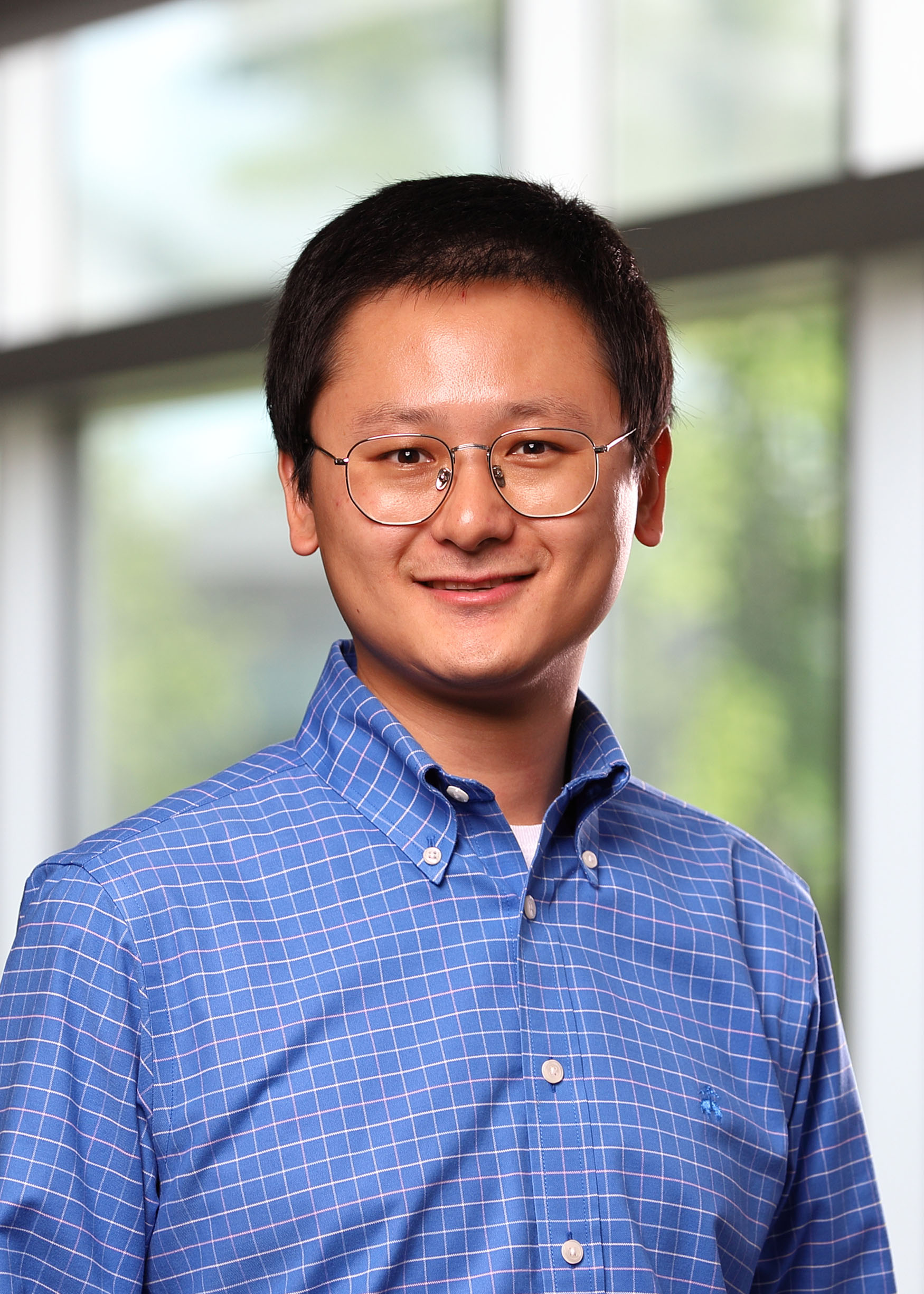 Wei Wang, Ph.D.
Associate Director, Statistical Innovation in Methodology and Safety Analytics,
Daiichi Sankyo, Inc. | Dr. Wei Wang is an Associate Director of Biostatistics at Daiichi Sankyo, where he serves as a cross-program lead safety statistician supporting the clinical development of oncology compounds. Prior to joining Daiichi Sankyo, he worked at Merck as a safety statistician supporting multiple oncology development programs. His research interests include statistical methods for safety monitoring in ongoing clinical trials, causal inference, and survival analysis. He is an active contributor to the ASA Biopharmaceutical Section Safety Working Group. Wei received his PhD in Biostatistics from Rutgers University. | Estimating & Comparing the Incidence of Adverse Events using Clinical Trial Data Focusing on Oncology Trials: A Safety Estimand Perspective (Part 2 of 3)
This presentation focuses on a simulation study comparing common estimators of adverse event (AE) incidence—the crude proportion, Kaplan–Meier (KM) estimate, and Aalen–Johansen (AJ) estimate of cumulative incidence—across several data scenarios with and without censoring and competing events. The results illustrate how censoring and competing events affect the estimators and how each estimator addresses a different clinical question. |
 Viviana Rodriguez, Ph.D.
Associate Director,
Clinical Safety Statistics,
Merck & Co., Inc.
| Dr. Viviana Rodriguez is an Associate Principal Scientist in Biostatistics and Research Decision Sciences (BARDS), Clinical Safety Statistics, at Merck & Co., Inc. Rahway, New Jersey, USA. A Fulbright Scholar, she received her Ph.D. in Biostatistics from Virginia Commonwealth University in 2020. She provides statistical leadership for oncology safety programs and contributes to strategic BARDS initiatives supporting drug development and safety evaluation. Before joining Merck, she spent 15 years in academia as an Assistant Professor, leading and collaborating on applied clinical research across multiple disciplines. Her professional interests include generalized statistical modeling, survival analysis, compositional data analysis, and drug safety.
| Estimating & Comparing the Incidence of Adverse Events using Clinical Trial Data Focusing on Oncology Trials: A Safety Estimand Perspective (Part 3 of 3) Kaplan–Meier (KM) and Aalen–Johansen (AJ) estimators rely on the assumption of noninformative censoring, which may be questionable when treatment discontinuation is associated with subsequent adverse event (AE) risk. This presentation will examine analyses for assessing departures from this assumption and introduce inverse probability of censoring weighting (IPCW) as an approach to addressing potentially informative censoring. An overview of IPCW will explain how weights are calculated using the inverse of each participant’s estimated conditional probability of remaining uncensored, with the probabilities and resulting weights updated over time during follow-up. |